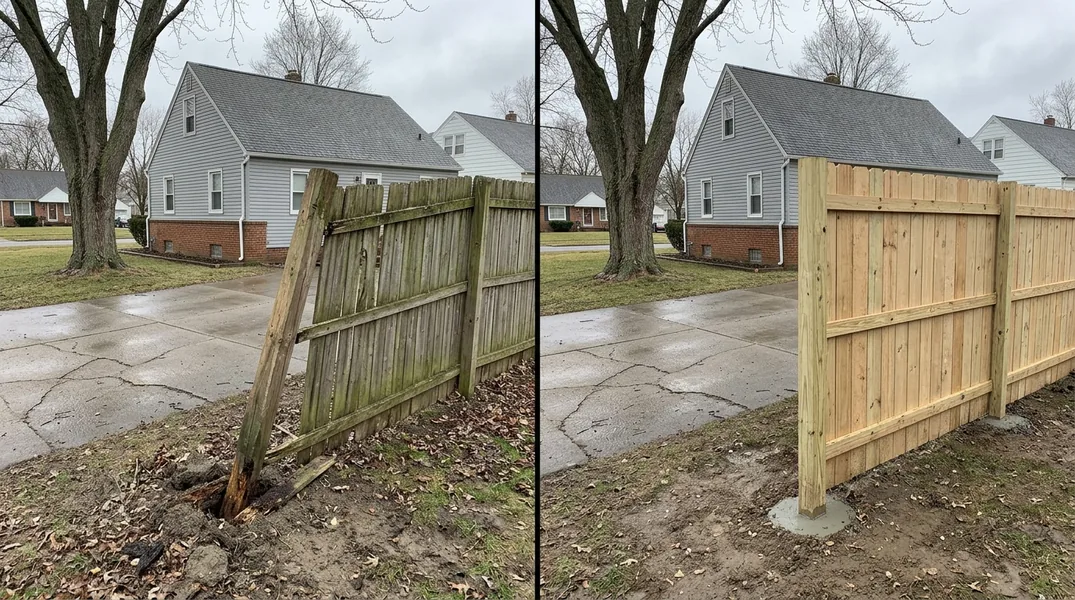
Why Buffalo Fences Lean: Understanding Frost Heave and Soil Conditions
If you've noticed your fence leaning, tilting, or pulling away from the property line, you're not alone. Many homeowners throughout Buffalo and the surrounding communities experience this frustrating problem. The culprit often has less to do with poor installation and more to do with the unique climate and soil conditions that define Western New York.
Frost heave is the primary reason fences lean in our region. During the winter months, moisture in the soil around your fence posts freezes and expands. This natural expansion pushes fence posts upward and outward, gradually forcing them out of their original vertical position. Once spring arrives and the ground thaws, the posts don't always settle back perfectly. Year after year of this freeze-thaw cycle compounds the problem, leaving your fence visibly tilted and structurally compromised.
Buffalo's clay-rich soil makes this issue even more pronounced. The dense, moisture-retentive nature of lake clay means water lingers around fence posts longer than it would in sandier or more porous soils. This extended moisture exposure creates ideal conditions for frost heave to occur repeatedly. If your property sits in Cheektowaga, Tonawanda, or other nearby communities, you're dealing with similar soil challenges.
Rotted Fence Post Repair: Addressing the Secondary Problem
While frost heave pushes posts out of position, water damage creates an equally serious threat from within. Rotted fence posts are one of the most common reasons homeowners need fence repair in Buffalo. The same moisture that causes frost heave also saturates the wood itself, especially where the post enters the soil. Without proper drainage and maintenance, wood posts absorb water, leading to rot, decay, and structural failure.
Rotted posts lose their load-bearing capacity and become unable to support the weight of fence panels and rails. You might notice soft or spongy wood, dark discoloration, or a mushy texture when you press on the post. Once rot sets in, the post cannot be saved. The affected section must be removed and replaced with a new pressure-treated post or a more rot-resistant alternative. This is why catching the problem early and addressing drainage issues is so important for extending the life of your fence.
The combination of frost heave and rotted posts creates a compounding problem. A leaning fence stresses the remaining posts, accelerating rot in neighboring sections. This is why a single leaning fence post often signals that multiple repairs may be needed soon. Professional inspection can identify which posts are compromised and which can be salvaged with proper support.
Frost Heave Fence Posts: How the Freeze-Thaw Cycle Damages Your Investment
Understanding the mechanics of frost heave helps explain why it's so prevalent in Western New York winters. Frost heave occurs when water in the soil expands as it freezes, exerting tremendous upward pressure on anything embedded in the ground, including fence posts. Buffalo's average winter temperatures drop well below freezing for extended periods, creating multiple freeze-thaw cycles throughout the season. Each cycle pushes posts higher and shifts them laterally.
The depth at which you install fence posts matters significantly. Posts installed too shallowly are more susceptible to frost heave because they haven't penetrated below the frost line. In Buffalo, the frost line typically extends 3 to 4 feet deep, depending on your exact location and soil composition. Professional fence installers know to dig deeper than the minimum to account for local frost conditions. However, even properly installed posts can shift over time if the surrounding soil has high moisture content and poor drainage.
Prevention is far more cost-effective than repair. Installing posts in concrete footings that extend below the frost line significantly reduces frost heave risk. Ensuring proper drainage around the base of posts, sloping soil away from the fence line, and using perforated drain tile in problem areas can all help minimize the effects of seasonal moisture and freezing. If your fence is already leaning, professional Wood & Privacy Fence Installation experts can assess whether your posts can be reset or if replacement is necessary.
Leaning Fence Repair: When to Call a Professional Near Me
A leaning fence is more than an eyesore. It's a sign that structural damage is underway. The longer you wait to address the problem, the more expensive the repair becomes. If you notice your fence tilting, you should schedule a free estimate with a qualified fence contractor right away. Buffalo Fence serves homeowners throughout the region and can provide a detailed assessment of your fence's condition.
Some leaning fence repairs can be addressed by resetting posts, which involves temporarily removing or lifting fence panels, digging out the post, and reinstalling it in the correct vertical position with fresh concrete. This works best when the post itself is still structurally sound and the lean is caused primarily by frost heave rather than rot. However, if the post is rotted or severely compromised, replacement is the only viable solution.
The repair process typically involves removing the affected section of fencing, extracting the damaged post, digging a new hole at the proper depth with adequate concrete footing, and installing a new pressure-treated or composite post. The fence panels and rails are then reattached. For homeowners in North Tonawanda or other outlying areas, professional crews can handle the entire job efficiently, minimizing disruption to your property. Don't attempt to straighten a leaning fence on your own, as improper techniques can cause further damage or injury.
Wood and Privacy Fence Installation Cost in Buffalo: What to Budget for Repairs
The cost of repairing a leaning or rotted fence varies depending on the extent of the damage, the number of posts affected, and the materials used. A single post replacement might range from a few hundred dollars, while extensive repairs involving multiple posts and sections could cost significantly more. The best way to understand your specific repair costs is to contact Buffalo Fence at (716) 274-5875 for a detailed consultation and pricing estimate.
When budgeting for fence repairs, consider whether you're simply fixing the immediate problem or investing in a more permanent solution. Using pressure-treated posts with deeper concrete footings costs more upfront but can extend the life of your fence by many years. Some homeowners choose to replace an entire section of fence rather than patch individual posts, especially if the fence is aging or if multiple posts show signs of damage. This approach often provides better long-term value and a more uniform appearance.
Prevention and early maintenance can save you thousands in repair costs. Regular inspections, especially in spring after winter freeze-thaw cycles, help catch problems before they escalate. Ensuring proper drainage around your fence line and addressing any visible rot or leaning immediately will protect your investment. If you're considering a complete fence replacement or major renovation, exploring options like Vinyl & PVC Fence Installation might offer advantages in durability and low maintenance compared to traditional wood.
Protecting Your Fence: Prevention and Long-Term Maintenance
The best approach to fence problems is prevention. While you cannot control Buffalo's winter weather or the clay soil beneath your property, you can take steps to minimize damage. Ensure that soil slopes away from your fence line so water drains properly and doesn't pool around post bases. Install gutters and downspouts on nearby structures to direct roof runoff away from the fence. In areas prone to standing water, consider installing a perforated drain tile system along the fence line.
Regular maintenance also extends fence life significantly. Inspect your fence at least twice per year, particularly in spring and fall. Look for signs of leaning, rotting wood, loose fasteners, or damaged panels. Apply wood stain or sealant every few years to protect against moisture penetration. Trim vegetation away from the fence base to improve air circulation and reduce moisture retention. These simple steps can add years to your fence's lifespan and prevent costly repairs down the road.
If you're planning a new fence installation and want to avoid these problems from the start, discuss frost heave prevention strategies with your contractor during the planning phase. Buffalo Fence has decades of experience building fences that withstand Buffalo's challenging climate. Whether you need repair advice or are ready to install a new fence, contact us today at (716) 274-5875 or visit our website to schedule your free estimate. We're committed to helping you build a fence that lasts.
Looking for a professional fence contractor in Buffalo? Buffalo Fence responds fast for all your fence needs.
Get a Free Quote