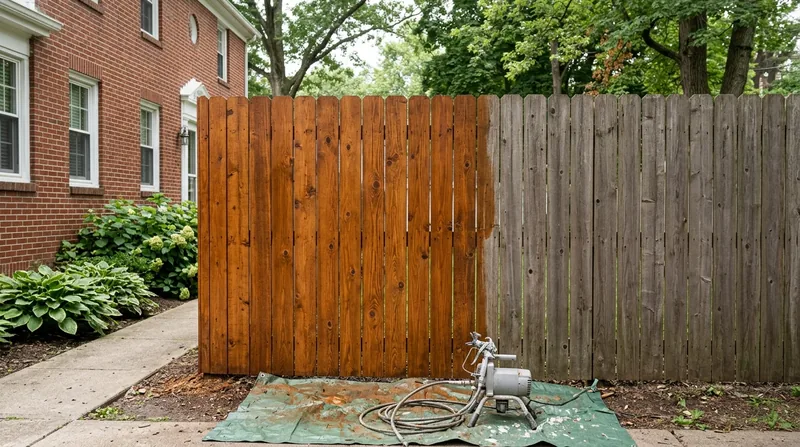




Fence staining in Buffalo is not optional maintenance for cedar privacy fences, it is essential insurance against the climate. Our region's freeze-thaw cycles, lake-effect snow, wet springs and road salt spray break down wood fast. A cedar fence that gets stained and sealed every 2 to 3 years can easily double its useful life, staying sound through decades of Buffalo winters instead of rotting at the base within 5 to 8 years. We clean, brighten and seal cedar fences to stop water penetration at the source, and we tell you straight when staining still makes economic sense and when the wood has degraded past the point of rescue.
Why Cedar Fences in Buffalo Need Professional Staining and Sealing
Buffalo's climate is hard on wood. Winter temperatures drop well below freezing, snow and ice pile against fence lines, and spring melt saturates the ground for weeks. Summer brings humidity off Lake Erie, and road salt spray hits front-yard fences in neighborhoods close to major roads. Cedar and pressure-treated pine absorb moisture through end grain and surface checks, then freeze expands the wood and opens new cracks where water penetrates deeper. Within a few seasons, the heartwood begins to soften and rot at the base of posts and along the bottom rails where posts meet frozen soil.
Professional staining seals the wood grain and surface, slowing water uptake dramatically. A quality exterior stain also blocks UV light, which breaks down the wood's lignin and causes the grey weathering you see on untreated fences. Sealing and staining together can extend a cedar fence's lifespan from 5 to 8 years to 12 to 16 years or longer, depending on the wood species, fence orientation and exposure.
- Stop moisture penetration at the wood surface before freeze-thaw damage accelerates decay.
- Block ultraviolet light to prevent the grey weathering and brittleness that leads to checking and splitting.
- Reduce the speed at which salt spray and road grime discolor and corrode the wood fibers.
- Catch rot early on fence posts and rails so repair is still possible instead of full replacement.
These steps protect your fence investment and avoid the cost and disruption of early replacement.
Key info: A 6-foot cedar privacy fence in Williamsville or West Seneca that faces north or west gets hit hardest by winter wind and spring runoff. Staining every 2 years on exposed sides can prevent post rot that would otherwise force full fence replacement within a decade.
For more on what causes fence failure in our climate and how to extend wood fence life, see our full wood privacy fence installation guide.
How We Clean, Stain and Seal Cedar Fences in Buffalo
Our process starts with a hard look at what you have. If the wood is still sound, we clean it, assess the existing finish, and choose a stain and sealer matched to your fence's exposure and the wood species. If rot or severe damage is already present, we tell you whether repair is worth the cost or whether replacement is the smarter spend. We do not stain over rotten wood or hide structural problems under a fresh coat.
When staining makes sense, we follow these steps to deliver lasting protection:
- Power wash the fence to remove dirt, algae, mildew and loose finish, using pressure low enough to avoid gouging the wood surface.
- Sand rough areas and check for soft spots in posts and rails that signal hidden rot.
- Allow the wood to dry fully, usually 48 to 72 hours after washing, so stain can penetrate evenly.
- Apply exterior-grade stain in 2 coats, working with the grain and into end grain at post tops and rail ends where water entry is fastest.
- Finish with a clear or tinted sealer to lock in the stain and add a water-shedding barrier.
The whole job typically takes 3 to 5 business days depending on fence length and weather, and the stain cures to full hardness within 2 weeks.
Example: A 120-foot cedar fence in Kenmore that has not been sealed in 4 years shows light grey weathering and some surface checking, but the posts are still firm. We wash, sand and apply a semi-transparent stain with a polyurethane topcoat. Cost runs $1,400 to $1,800 depending on the stain color and existing finish condition. The same fence with rot at the base of corner posts would need post replacement before staining, adding $400 to $600 per post and shifting the scope to fence post repair and replacement.
| Approach | Description | Best for |
|---|---|---|
| Brightening wash only | Power wash and light sanding to remove dirt and algae, no stain applied. | Fences that were recently stained and need cleaning, or temporary cosmetic refresh before sale. |
| Semi-transparent stain and sealer | 2-coat stain that shows wood grain and color, topped with polyurethane or acrylic sealer for water and UV protection. | Cedar fences in good condition that need protection and a warm, natural appearance. |
| Solid-color stain and sealer | Opaque stain that covers wood grain with a uniform color, sealed with polyurethane for durability. | Weathered or discolored fences where uniform appearance is the goal, or where color matching an existing structure is needed. |
| Clear sealer only | No stain, just a clear polyurethane or water-based sealer to shed water and slow weathering. | Newer cedar fences or those with rich natural color that the owner wants to preserve as-is. |
Fence Staining and Restoration Cost in Buffalo: What to Expect
Fence staining cost in Buffalo depends on fence length, the condition of the wood, and whether repair of damaged posts or rails is needed before staining can begin. A straightforward staining job on a well-maintained fence runs lower than one that requires extensive prep, post replacement or structural repair.
Starting pricing for a basic staining and sealing project is around $950 for a smaller fence, typically 60 to 80 linear feet. Larger fences, fences with heavy weathering or algae growth, and fences that need post repair before staining can be sealed will cost more. A 150-foot cedar fence in good condition with a semi-transparent stain and sealer typically runs $1,800 to $2,400. If posts need replacement or significant rot repair, add $400 to $600 per post.
The best way to know your actual cost is to get a free estimate. We inspect the fence, identify any damage, and quote the full scope including materials and labor. We recommend getting 2 to 3 estimates so you can compare approach and pricing. Our estimates are free and come with no obligation to book.
For detailed pricing on all our fence services and a full breakdown of factors that affect cost, visit our pricing page.
What to Look for When Hiring a Fence Contractor Near Me in Buffalo
Finding a trustworthy fence contractor near you in Buffalo, Cheektowaga, Tonawanda or the surrounding towns comes down to a few concrete checks. Ask whether the contractor carries general liability and workers' compensation insurance, and request a certificate of insurance before work begins. Insurance protects you if someone is injured on your property or if damage occurs to your home or neighbor's property during the job.
Always check with your city or village building department before work starts to learn whether a permit is needed and what setback or height rules apply to your property. If you live in a master-planned community or have an HOA, check your architectural guidelines for approval of stain color and finish type, as some communities restrict stain color or require pre-approval.
Get multiple estimates, ask for references from recent jobs in your neighborhood, and verify that the contractor has experience with cedar fences and understands Buffalo's climate and freeze-thaw damage. A contractor who looks at your fence and immediately recommends full replacement without exploring repair is not doing you a favor, and one who stains over obvious rot is setting you up for failure.
When you are ready to move forward, contact us for a free estimate at (716) 274-5875. We inspect your fence, walk you through the work, and answer questions about cost and timeline before you decide.
Fence Staining & Restoration in Buffalo: Pricing Guide
| Service | Price | Details |
|---|---|---|
| Brightening wash and light sanding | Starting at $650 | Cleaning and prep for fences 60 to 80 linear feet, no stain or sealer applied, cosmetic refresh only |
| Staining and sealing, semi-transparent finish | Starting at $950 | Wash, sand, 2-coat semi-transparent stain and sealer for 60 to 80 linear feet of cedar in good condition |
| Staining and sealing, solid-color finish | Starting at $1,100 | Wash, sand, 2-coat opaque stain and sealer for weathered or discolored cedar, 60 to 80 linear feet |
| Staining with post repair or replacement | On estimate | Rot at base of posts or rails requires repair or replacement before staining, cost varies by damage extent |
| Travel | Included | No separate mileage or travel fee in Buffalo and surrounding service areas |
| Free estimate | Free | On-site inspection and written quote, no obligation, response within 24 hours at (716) 274-5875 |
Indicative pricing, the exact cost depends on square footage, finish, and site access. Free personalized estimate within 24h at (716) 274-5875.


