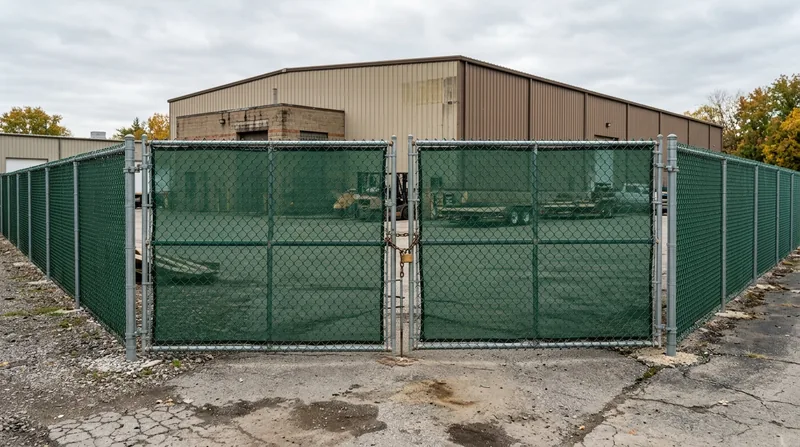




Construction sites, property renovations, and temporary jobsite security across Buffalo and Western New York demand commercial fence installation that goes up fast and comes down clean. Whether you need a temporary construction fence to secure an active build, commercial chain link fencing for ongoing perimeter control, or silt fence installation to manage erosion on a graded lot, Buffalo Fence delivers code-aware layouts and volume pricing for builders, general contractors, and property managers. The flat terrain and heavy seasonal weather of Western New York create unique demands: late-fall and spring jobsites face freeze-thaw cycles that stress temporary posts, winter snow load and wind off Lake Erie test panel anchoring, and spring runoff requires silt fencing to meet stormwater and environmental code. We install these systems right the first time so your project stays secure and compliant from day one through demobilization.
Why Commercial and Temporary Fencing Matters on Buffalo Jobsites
A construction site without proper perimeter fencing is a liability and a code violation. Commercial security fencing protects equipment, controls site access, and signals to the public that the area is active and managed. Temporary fencing also isolates work zones from pedestrian and vehicular traffic, reducing injury risk and insurance exposure. In Buffalo's dense residential neighborhoods, from the Victorian lots of Allentown to the subdivision homes of Clarence and Orchard Park, active construction demands fast, professional perimeter setup that respects neighboring properties and meets local building department rules.
- Galvanized or powder-coated chain link withstands Buffalo's winter salt spray and freeze-thaw cycles without rust or corrosion.
- Temporary panels and posts are engineered to resist wind loads and heavy snow without permanent foundation disruption.
- Silt fence prevents sediment and debris from washing into storm drains and adjacent properties during grading and excavation.
- Fast installation and removal minimize project delays and keep your timeline and budget on track.
Proper temporary fencing also satisfies insurance carriers, municipal inspectors, and lenders who require evidence of site control before work proceeds.
Key info: Buffalo's building department and the Erie County Department of Environment and Planning both enforce temporary fencing and erosion control rules on active sites. Check with your local municipality before installation. See City of Buffalo Building Services for permit and code details.
How We Install Commercial and Temporary Fencing Across Buffalo
Our process is straightforward and site-aware. We begin with a site walk to assess terrain, utility runs, and weather exposure, then confirm your perimeter line and any setback or access requirements with you and your GC. We call 811 for a free utility locate (required by New York law before any digging) and set posts in tamped earth or concrete depending on soil type and expected wind load. Chain link panels are stretched tight and secured with tension bands to prevent sagging and racking, and corner bracing is added where wind or equipment movement poses a risk. For silt fence, we install filter fabric on posts or wire at the downslope edge of graded areas, with overlapped seams and proper anchoring to contain sediment during rain events. Demobilization is equally professional: we remove all materials, reset any disturbed soil, and leave the site clean. See our full chain link fence installation page for material and gauge details.
- We verify the property line and setback rules with you before marking post locations.
- Posts are set 6 feet on center for standard temporary chain link, closer for high-wind or heavy-load sites.
- All panels are stretched and braced to eliminate sag and racking under load or weather stress.
- Silt fence is installed downslope with proper overlap and anchoring to capture sediment and meet stormwater rules.
- We remove all materials at project end and haul them off-site, leaving the area ready for the next phase.
This methodical approach keeps your site secure, compliant, and safe from day one.
Local example: A 2-acre grading project in West Seneca requires both perimeter chain link fencing to control equipment access and silt fence along the downslope property line to manage spring runoff into the adjacent residential street. We install both systems in a single mobilization, with corner bracing to resist Lake Erie wind gusts and overlapped silt fabric to capture sediment throughout the wet season.
Commercial Fencing Methods and Materials
| Approach | Description | Best for |
|---|---|---|
| Chain Link Perimeter | Galvanized or powder-coated steel mesh panels, 2-inch or 1.5-inch diamond, tensioned on posts with tension bands and stretcher bars. | Active construction sites, equipment storage yards, temporary project boundaries. |
| Temporary Panels | Lightweight chain link or welded mesh panels on portable posts, set without digging, removable in hours. | Short-term jobsites, special events, pop-up installations, minimal site disruption required. |
| Silt Fence | Woven or non-woven filter fabric stapled or wired to posts, installed downslope to trap sediment and prevent stormwater runoff pollution. | Grading and excavation sites, stormwater and erosion control, regulatory compliance on sensitive or wetland-adjacent properties. |
| Anti-Sag Bracing | Diagonal or V-bracing on corner and end posts to resist wind load, impact, and equipment movement without panel deformation. | High-wind sites, heavy equipment storage, long runs without intermediate bracing, Buffalo's seasonal wind and snow load. |
Commercial and Temporary Fencing Cost in Buffalo: What to Expect
The cost of temporary construction fence and commercial chain link fencing depends on perimeter length, panel height, soil conditions, site access, and how long the fence will stand. A free site quote from Buffalo Fence is your starting point. Most temporary chain link installations run between 8 and 16 dollars per linear foot for materials and labor, with silt fence adding 2 to 4 dollars per linear foot depending on fabric grade and terrain. A typical 200-foot perimeter with 6-foot-high chain link and corner bracing costs between 1,600 and 3,200 dollars, delivered and installed. Larger sites, difficult terrain, or extended deployments may run higher. Visit our pricing page for detailed breakdowns and examples.
Factors that move the cost up include rocky or clay-heavy soil (common across Buffalo) that requires deeper post holes or concrete setting, limited site access that slows installation, existing utilities that require careful hand-digging, and wind-exposed locations that demand extra bracing. Getting 2 to 3 estimates also helps you understand market rates and identify any scope differences. Ask each contractor whether their quote includes removal and haul-off at the end of the project, because disposal costs vary widely.
What to Look for When Hiring a Commercial Fence Contractor Near Buffalo
Choosing the right contractor for your temporary or commercial fencing project protects your schedule, budget, and liability. In Buffalo and the surrounding areas, look for a contractor who is fully insured with general liability and workers' compensation coverage, and who can provide a certificate of insurance on request. Fence work in New York is not uniformly licensed at the state level, so fence licensing here is set county by county and by individual municipalities. Check with your local building department and your general contractor to understand what credentials or permits apply to your specific jobsite and jurisdiction. Always get multiple estimates, check references from recent commercial projects, and confirm that the contractor understands local setback rules, utility locate requirements (811 is mandatory before digging), and any HOA or municipal design standards that apply. A good contractor also asks questions about your timeline, weather windows, and future site access, because these factors shape the installation method and removal schedule.
- Verify that the contractor carries current general liability and workers' compensation insurance and can provide proof on request.
- Ask for references from three recent commercial or temporary fencing projects in Buffalo or Cheektowaga.
- Confirm that the contractor calls 811 for utility locates and includes that in the quote, because New York law requires it.
- Discuss your site timeline, weather exposure, and removal date so the contractor can size posts and bracing correctly.
- Review the estimate carefully: it should list perimeter length, panel height, post spacing, material grade, and removal and haul-off.
For more information or a free estimate, contact us at (716) 274-5875 or visit our contact page.
Commercial & Temporary Fencing in Buffalo: Pricing Guide
| Service | Price | Details |
|---|---|---|
| Temporary chain link fencing, 4-foot height | Starting at $8/linear foot | Materials and installation on level terrain with good access and standard soil conditions |
| Temporary chain link fencing, 6-foot height with corner bracing | Starting at $12/linear foot | Includes anti-sag bracing for wind exposure and heavy equipment storage areas |
| Silt fence installation, standard grade | Starting at $2/linear foot | Woven filter fabric on posts, downslope placement, includes labor and material |
| Site visit and free estimate | Free | Response within 24 hours, perimeter walk-through, soil and access assessment, no obligation |
| Removal and haul-off at project end | Included in estimate | All materials removed and hauled off-site, area reset and cleaned for next phase |
| Complex or large-scale deployment | On-site estimate | Rocky soil, difficult access, extended duration, or multiple fence types require detailed assessment |
Indicative pricing, the exact cost depends on square footage, finish, and site access. Free personalized estimate within 24h at (716) 274-5875.


