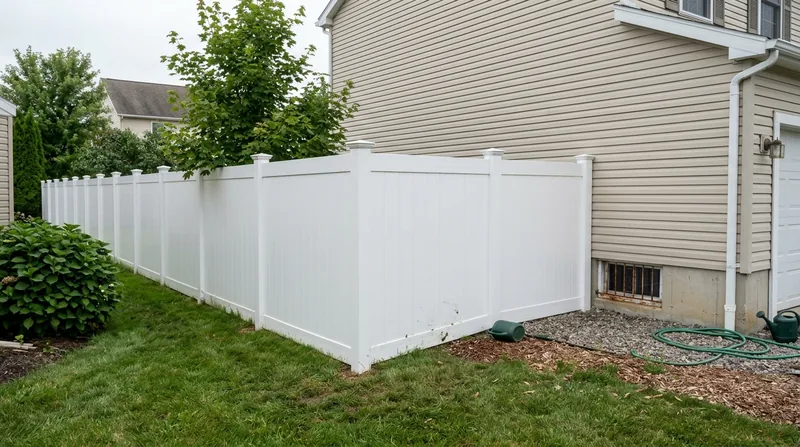




Vinyl & PVC fence installation in Buffalo is the smart choice for homeowners tired of wood rot, frost heave, and the constant maintenance that comes with Western New York winters. Buffalo sits at the head of the Niagara River on the eastern shore of Lake Erie, where lake-effect snow buries fence lines, freeze-thaw cycles heave posts out of the ground, and road salt spray eats through metal and rots wood at the ground line. Vinyl and PVC panels handle that climate without warping, splitting, or needing paint every few years. We install manufacturer-backed vinyl privacy fences, picket styles, and ranch-rail designs with correct post spacing and concrete-set footings, engineered to stand firm through Buffalo's deep winters and the heavy plowed banks that pile against fence lines every season. No shortcuts, no flimsy post-setting, no false economy that leaves you with a leaning fence by spring thaw. This guide walks you through why vinyl works in Buffalo, how we install it right, what it costs, and what to look for when you hire.
Why Vinyl & PVC Fencing Matters in Buffalo's Harsh Winter Climate
Buffalo homeowners know that wood fences struggle here. Cedar and pressure-treated pine posts rot at the ground line where moisture sits all spring, and lake-effect snow piles up so fast that the weight and freeze-thaw cycle heave posts right out of the ground. Vinyl solves that problem. PVC does not absorb water, does not rot, and does not heave when the frost pushes. The panels stay straight season after season, and they shed snow and ice instead of holding moisture. Road salt spray off Lake Erie, which corrodes galvanized chain link and wrought iron, simply washes off vinyl with no damage.
- Vinyl panels resist freeze-thaw heaving that pushes wood posts out of plumb by spring.
- No rot, no paint, no stain, no seasonal maintenance beyond occasional cleaning with a hose.
- Salt spray and lake-effect moisture that destroy wood and metal leave vinyl unchanged.
- Panels last 20 to 30 years in Buffalo's climate with no structural failure.
- HOA-approved colors and styles fit new subdivisions in Amherst, Clarence, and Lancaster without variance requests.
These advantages make vinyl the right material for Buffalo's residential neighborhoods, from the narrow deep lots of Allentown and South Buffalo to the newer two-story subdivisions across the Southtowns.
Key info: Buffalo's freeze-thaw cycle and road salt spray are the two biggest threats to any fence. Vinyl handles both without repair or replacement. For comparison, a wood privacy fence in Buffalo typically needs post replacement within 10 to 15 years, while a vinyl fence installed right stays structurally sound for 25 years or more. See the City of Buffalo Department of Permit and Inspection Services website for setback and height rules that apply in your neighborhood.
How We Install Vinyl & PVC Fences in Buffalo: The Right Way
Vinyl fence installation is not difficult, but it demands exact post spacing, level stringers, and concrete-set footings that hold through Buffalo's winters. We start with a site survey, call 811 for utility locates (required by New York law before digging any post hole), and mark the fence line. Posts go in 6 feet apart for privacy panels and 8 feet apart for picket or ranch-rail, set in concrete footings dug below the frost line. Stringers are leveled and squared, and panels are installed plumb so they hang straight and don't rack or twist. Trim, caps, and hardware go on last.
- We call 811 to locate underground utilities before digging any post holes.
- Posts are set in concrete footings dug below Buffalo's frost line, not just tamped.
- Stringers are leveled and squared so panels hang plumb and don't rack.
- Vinyl panels are installed per manufacturer spec, with correct spacing and fastener type.
- Trim, caps, and gate hardware are installed to match the panel style and finish.
The result is a fence that stands straight through spring thaw, heavy snow load, and wind off Lake Erie.
Example: A vinyl privacy fence installed in Williamsville starts with posts set in concrete 30 inches deep, below the frost line. Stringers are leveled to within 1/8 inch so panels hang straight. When spring thaw heaves the ground 2 to 3 inches, the concrete-set post footings hold, and the fence stays plumb. A tamped post in the same yard would lean by April. That's why concrete-set footings are not optional in Buffalo.
For details on post repair and replacement when frost heave or rot does strike, see our fence post repair and replacement page.
Vinyl & PVC Fence Installation Methods: Comparing Your Options
| Style | Description | Best for |
|---|---|---|
| Vinyl Privacy Panels | Solid 6-foot panels with no gaps, mimicking wood privacy fence appearance. Available in white, tan, gray, and black. Stringers run horizontally between posts. | Backyards, side yards, pool enclosures, and residential lots where privacy and wind resistance matter. |
| Vinyl Picket Fence | Spaced vertical pickets on horizontal rails, typically 3 to 4 feet tall. Lighter appearance than privacy panels. Common colors are white, tan, and black. | Front yards, property boundaries, HOA-approved aesthetic in newer subdivisions, and decorative enclosures. |
| Vinyl Ranch-Rail | Two or three horizontal rails between posts with no pickets. Open appearance, minimum wind load. Often used on acreage and rural property. | Large residential lots, farm and ranch properties, and areas where sight lines and air flow are priorities. |
| Stepped or Racked Installation | Panels stepped or racked to follow sloped or uneven terrain. Requires careful post setting and panel alignment to avoid gaps and sagging. | Hilly properties in the Southtowns and areas with rolling till. Stepped is cleaner; racked is more economical but less formal. |
Each style has a place. Privacy panels block wind and provide seclusion; picket fences define boundaries with an open feel; ranch-rail works on larger acreage; and stepped or racked installation adapts to Buffalo's rolling terrain in Orchard Park, Hamburg, and East Aurora.
Vinyl & PVC Fence Installation Cost in Buffalo: What to Expect
Vinyl fence installation in Buffalo starts at around $38 per linear foot for a standard privacy fence with posts set in concrete. That price covers the vinyl panels, hardware, stringers, and labor to install them plumb and level. The actual cost depends on several real-world factors: the length of the fence line, the terrain (flat versus stepped or racked), whether utilities or obstacles slow the work, gate openings, and the specific panel style and color. A 100-foot privacy fence in Tonawanda or Kenmore typically runs $3,800 to $5,000 installed; a 200-foot run might be $7,600 to $10,000. Picket and ranch-rail styles run lower because they use less material and labor. Stepped installation on sloped ground costs more because each panel takes longer to set level and plumb.
The best way to know your actual cost is to get two or three free estimates from local installers who will walk your property, measure the line, and account for terrain, access, and any obstacles. We respond to estimate requests within 24 hours at (716) 274-5875. For a full pricing breakdown and examples by fence type, see our complete pricing page.
Cost factors: A 150-foot vinyl privacy fence on flat ground in West Seneca runs $5,700 to $7,500. If the same fence is stepped to follow a slope in Orchard Park, add 15 to 25 percent. If the line crosses a wet area or dense clay, post holes take longer and cost more. Removing an old fence first adds labor and disposal. Gate openings and special hardware add to the total. Always get the breakdown in writing so you know what's included.
What to Look for When Hiring a Vinyl Fence Contractor Near Buffalo
Hiring the right contractor makes the difference between a fence that lasts 25 years and one that starts failing in five. When you call around Buffalo, Cheektowaga, Tonawanda, and the surrounding towns, ask the right questions. Check that the contractor carries general liability and workers' compensation insurance and can provide a certificate of insurance on request. Always verify HOA rules and setback requirements with your neighborhood architectural committee and the City of Buffalo Department of Permit and Inspection Services before work starts. Get multiple estimates in writing, including post depth, concrete footings, and panel spec. Ask for references from recent jobs in your neighborhood. Call them and ask whether the fence was installed plumb and level, whether it held through the last winter, and whether the contractor cleaned up and showed up on time.
- Verify that the contractor carries general liability and workers' compensation insurance, with a certificate available on request.
- Confirm that posts are set in concrete footings dug below the frost line, not just tamped.
- Ask whether the estimate includes 811 utility locates and what the timeline is.
- Check HOA architectural standards and setback rules with your neighborhood committee and the city.
- Get estimates in writing with panel style, post spacing, concrete depth, and warranty terms.
- Call references from recent jobs in Buffalo and ask whether the fence stayed plumb through the winter.
A good contractor will walk your property, answer your questions directly, and explain why they do the work the way they do. They will not pressure you to decide on the spot or offer a discount for cash payment. Contact us for a free estimate at our contact page or call (716) 274-5875.
Vinyl & PVC Fence Installation in Buffalo: Pricing Guide
| Service | Price | Details |
|---|---|---|
| Vinyl Privacy Fence | Starting at $38/ft | Includes posts in concrete footings, level stringers, vinyl panels, trim, and hardware installation on flat to gently sloped ground |
| Vinyl Picket Fence | Starting at $28/ft | Lower cost than privacy; includes posts in concrete, horizontal rails, spaced pickets, and hardware for front yards and decorative enclosures |
| Vinyl Ranch-Rail | Starting at $22/ft | Minimal material and labor; two or three horizontal rails between posts, ideal for acreage and rural property with open sight lines |
| Stepped or Racked Installation | Add 15-25% | Sloped terrain requires careful post setting and panel alignment; common in Southtowns and rolling areas; stepped is formal, racked is economical |
| Gate Opening and Hardware | Add $400-$800 | Depends on gate width, hinge type, self-closing hardware, and whether a manual or automatic operator is installed |
| Free Estimate | No charge | Response within 24 hours at (716) 274-5875; includes site walk, measurement, terrain assessment, and written price breakdown |
Indicative pricing, the exact cost depends on square footage, finish, and site access. Free personalized estimate within 24h at (716) 274-5875.


