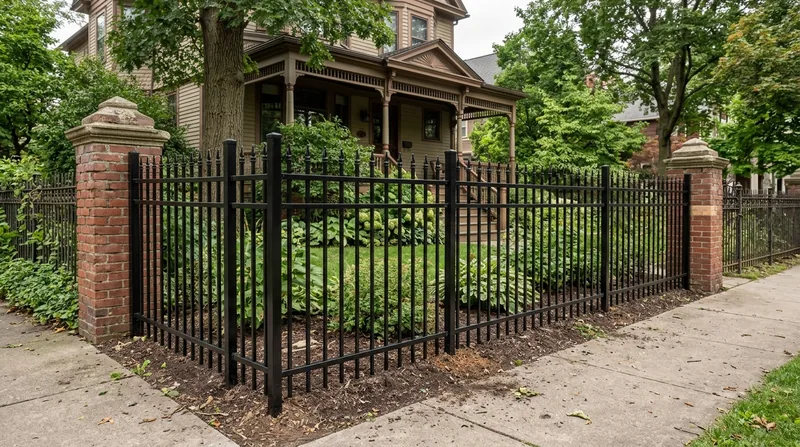



Buffalo's Victorian and Arts & Crafts neighborhoods, along with newer suburban developments across Cheektowaga, Tonawanda and the Southtowns, rely on durable perimeter fencing to define property lines and secure yards through harsh Great Lakes winters. Aluminum fence installation in Buffalo and ornamental iron work represent the premium choice for homeowners who want rust-resistant panels, clean welds and the aesthetic weight that suits historic homes and modern pool areas alike. Lake-effect snow, freeze-thaw cycles that heave posts, and road salt spray that corrodes galvanized steel make powder-coated aluminum and wrought iron the materials that actually hold up over time. Unlike cedar privacy fencing that rots at the ground line or chain link that sags under plowed snow banks, metal fencing stands straight and maintains its finish year after year. We install ornamental iron and aluminum panels on the flat city lots of Allentown and the sloped yards of Hamburg and Orchard Park, racking panels to follow terrain and setting posts in concrete below the frost line. This guide covers why metal fencing matters in Buffalo, how we build it, what it costs, and how to hire the right contractor.
Why Aluminum & Ornamental Iron Fencing Matters in Buffalo's Climate
Buffalo sits at the eastern end of Lake Erie where winter winds and salt-laden air accelerate corrosion in standard galvanized steel. Homeowners in North Buffalo, Black Rock and Riverside who install traditional chain link or painted wrought iron watch rust bloom within three to five years, especially along front yards where road salt spray reaches the fence line. Powder-coated aluminum and properly welded ornamental iron resist this degradation because the coating creates a barrier that salt and moisture cannot penetrate. Posts set below the frost line (typically 42 inches in Erie County) prevent heaving from the deep freeze cycles that crack concrete and twist gate hinges. Racked installation on sloped lots, common in the Southtowns and around Delaware Park, keeps panels plumb and gates operational even where grade changes sharply.
- Powder-coated finishes resist salt spray and lake-effect moisture far longer than painted or bare metal.
- Posts set in concrete below the frost line prevent heaving and leaning that plowed snow and freeze-thaw cycles cause.
- Racked panels follow sloped terrain without gaps, maintaining security and appearance on properties that drop toward ravines or hillsides.
- Ornamental iron and aluminum panels withstand the heavy wet snow loads that collapse cedar fences and sag chain link.
These materials keep their integrity through Buffalo's winter and hold their value longer than softer alternatives.
Key info: Front-yard metal fencing in historic neighborhoods like Allentown and the Elmwood Village often requires HOA or deed-restriction approval on style, height and finish. Check with your property documents or neighborhood association before ordering materials. Height limits vary by zone within Buffalo and surrounding municipalities, and setback rules protect corner visibility on residential streets.
For permit and code guidance, contact the City of Buffalo Building Department or your local municipal office to confirm fence height, setback and material rules for your address.
How We Install Aluminum & Ornamental Iron Fencing in Buffalo
Metal fence installation begins with a site survey to mark the fence line, confirm utility locations via a free 811 call (required by New York law before digging), and assess terrain. On flat city lots in Buffalo proper, we set posts 6 feet apart in concrete footings dug below the frost line. On sloped yards in Orchard Park, Hamburg and the rolling Southtowns, we rack the panels so that top and bottom rails remain parallel to the ground rather than following grade, which keeps the fence plumb and the gate swing true. Aluminum panels bolt together with stainless hardware, while ornamental iron panels are TIG-welded for strength and appearance. Powder coating is applied in a controlled shop environment before delivery, ensuring uniform finish and adhesion that field painting cannot match.
- Call 811 at least three business days before we dig post holes to locate buried electric, gas, water and telecom lines.
- We mark the fence line with you and verify setbacks and height limits against local code and any HOA restrictions.
- Posts are set in concrete below the frost line (typically 42 to 48 inches in Erie County) to prevent heaving.
- On sloped terrain, we rack panels so rails run level and the fence stands plumb regardless of grade changes.
- Aluminum panels bolt together with stainless fasteners; ornamental iron is TIG-welded for durability and clean appearance.
- Powder-coated finish is applied in the shop and cured before delivery, providing superior corrosion resistance compared to field painting.
This process ensures your fence stands straight, operates smoothly, and resists Buffalo's winter weather and salt spray.
Example: A homeowner in Williamsville with a sloped front yard and a wrought iron fence that needs to match the original 1920s home calls us to inspect the existing posts. We find frost heave and rotted wood at the ground line. Rather than salvage failing posts, we set new steel posts in concrete, TIG-weld new ornamental iron panels to match the original design, and powder-coat the entire installation. The fence sits plumb, the gate swings true, and the finish will hold for 15+ years.
See our gate installation and repair page for details on hinges, operators and automatic driveway gates that pair with metal fencing.
Methods: Aluminum vs. Ornamental Iron vs. Steel Fence Installation
| Material & Method | Description | Best For |
|---|---|---|
| Powder-Coated Aluminum | Lightweight panels bolt together with stainless hardware. Coating is applied in the shop and baked on for durability. No rusting, minimal maintenance. | Pool fencing, modern homes, front yards in subdivisions, anywhere salt spray or moisture is a concern. |
| Wrought Iron Ornamental | Hand-forged or fabricated panels are TIG-welded together for strength and visual detail. Powder-coated for corrosion resistance. Heavy, permanent look. | Historic homes, Victorian and Arts & Crafts neighborhoods, front yards in Allentown and Elmwood Village, custom designs. |
| Steel Ornamental (Welded) | Fabricated from steel tube or rod, TIG-welded and powder-coated. Stronger than aluminum, heavier appearance, requires consistent maintenance of finish. | Commercial properties, high-traffic areas, applications where maximum strength and visual impact matter most. |
| Racked Installation (Sloped Terrain) | Posts set at different depths so that top and bottom rails remain level and parallel to the ground, following grade changes. Common in the Southtowns and around Delaware Park. | Sloped yards, properties with significant grade changes, any terrain where stepped installation would leave gaps. |
Aluminum & Ornamental Iron Fencing Cost in Buffalo: What to Expect
Aluminum fence installation in Buffalo starts at around $42 per linear foot for standard powder-coated panels and basic hardware, installed on flat terrain with posts set in concrete. Ornamental iron fencing typically runs higher, from $55 to $85 per linear foot or more, depending on design complexity, panel height and whether panels are hand-forged or fabricated to match historic homes. A 100-foot aluminum fence on a flat lot in Cheektowaga or West Seneca runs roughly $4,200 to $5,000 before permits; the same fence racked on a sloped yard in Hamburg or Orchard Park costs more because each post requires custom depth calculation and panel fitting. Steel ornamental fencing and custom wrought iron designs are priced on estimate because welding time, material weight and finish details vary widely.
Factors that move the cost up include terrain slope (racked installation takes more labor), panel height (taller panels require heavier posts and deeper footings), gate openings (each opening requires hinges, latch hardware and sometimes an operator), proximity to buried utilities (complex locates delay the start), and access constraints (narrow driveways or gated properties slow crew movement). We always recommend getting two or three estimates so you understand the range and can compare scope, material quality and warranty across contractors.
Visit our pricing page for a detailed breakdown of costs by material, height and terrain, plus examples of common installations across Buffalo neighborhoods.
Aluminum & Ornamental Iron Fencing Near Me: What Buffalo Homeowners Should Know When Hiring a Contractor
Hiring the right fence contractor means checking insurance, understanding how permits work in your municipality, verifying references, and confirming that the contractor knows local code and HOA rules. Buffalo and surrounding areas have no statewide licensing requirement for fence installation, so licensing is not a credential you can verify; instead, confirm that the contractor carries general liability insurance and workers' compensation coverage, and ask for a certificate of insurance naming your property. Get at least two estimates so you see how different contractors approach your specific terrain and material choice. Ask for references from recent jobs in your neighborhood (Allentown, Elmwood Village, Williamsville, Orchard Park) so you can see finished work and hear from homeowners about durability and service.
If your property is in a historic district or subject to HOA restrictions, confirm height, material and finish rules before you sign a contract. Some neighborhoods limit fence height to 4 feet in front yards or require wrought iron over aluminum. If your fence borders a neighbor's property, check your deed or have a licensed land surveyor confirm the property line; we install on the line you identify, but we do not determine boundaries. New York law requires a free 811 utility locate call at least three business days before digging post holes, and the contractor must respect marked utility lines.
- Verify that the contractor carries general liability and workers' compensation insurance and can provide a current certificate.
- Get written estimates from at least two contractors so you can compare material, labor, timeline and warranty.
- Ask for references from recent jobs in your area and follow up with those homeowners about durability and service.
- Confirm fence height, setback and material rules with your local building department or HOA before ordering.
- Verify that the contractor will call 811 at least three business days before digging to locate buried utilities.
- If your property line is uncertain, hire a licensed land surveyor to mark it before installation begins.
These steps protect your investment and ensure the fence is installed correctly and complies with local rules.
Call us at (716) 274-5875 or visit our contact page to request a free estimate. We respond within 24 hours with no obligation to book.
Aluminum & Ornamental Iron Fencing in Buffalo: Pricing Guide
| Service | Price | Details |
|---|---|---|
| Aluminum Fence Installation | Starting at $42/ft | Powder-coated panels, bolted assembly, posts set in concrete on flat terrain, includes basic hardware |
| Ornamental Iron Fence Installation | Starting at $55/ft | TIG-welded panels, custom or stock designs, powder-coated finish, higher cost reflects welding labor and material weight |
| Racked Installation (Sloped Terrain) | Add 15-25% to base price | Posts set at custom depths to keep rails level on grade changes; common in Southtowns and properties with significant slope |
| Gates, Hinges & Hardware | Starting at $300 each | Self-closing hinges, latch hardware and anti-sag bracing; automatic gate operators quoted on site |
| Estimate | Free | Response within 24 hours at (716) 274-5875, includes site survey, terrain assessment and written quote |
Indicative pricing, the exact cost depends on square footage, finish, and site access. Free personalized estimate within 24h at (716) 274-5875.


