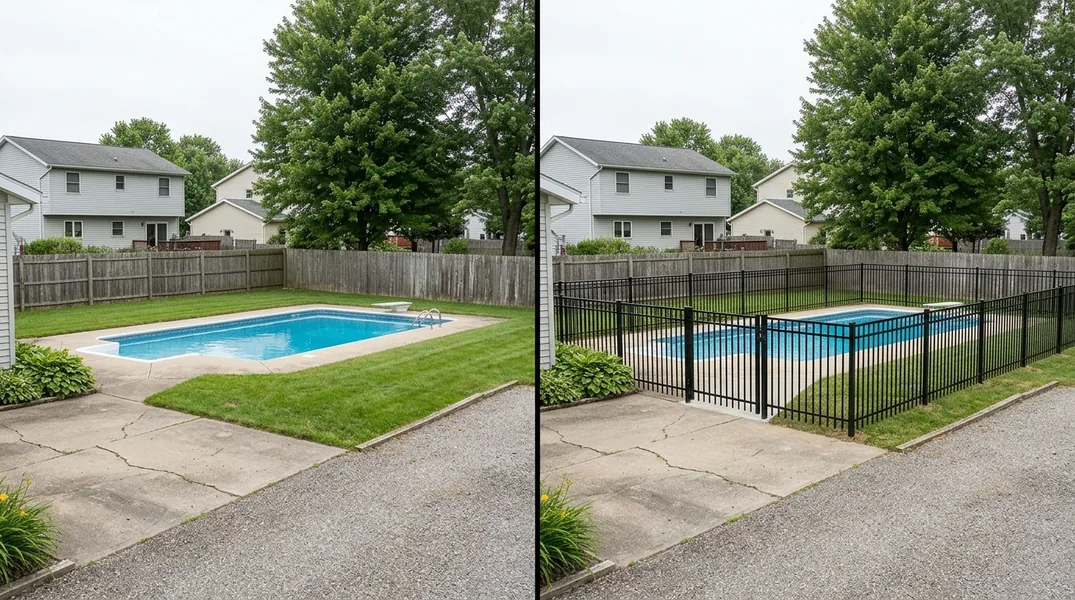
Understanding New York Pool Fence Code Requirements
If you're a homeowner in Buffalo with a swimming pool, you're not just investing in backyard fun, you're taking on legal responsibilities. New York State has strict pool fence code requirements designed to prevent accidental drowning, especially among young children. These regulations apply to all residential pools, whether in-ground or above-ground, and they're enforced at both the state and local levels.
The primary purpose of pool fence code requirements is to create a complete barrier that prevents unsupervised access to the water. This means your pool must be enclosed on all four sides by a fence, wall, or combination of barriers. The regulations are detailed and specific, covering everything from the height of the fence to the spacing of vertical components. Ignoring these requirements can result in fines, liability issues, and most importantly, puts children at serious risk. Before you begin any Wood & Privacy Fence Installation project around your pool, you need to understand exactly what New York law demands.
Pool Fence Height Requirements in New York
One of the most critical specifications homeowners ask about is pool fence height requirements. In New York, the minimum height for a pool fence is four feet, measured from the ground level on the pool side of the fence. This four-foot measurement is not arbitrary, it's based on extensive research into child safety and what constitutes an effective barrier to prevent young children from climbing over or accessing the pool area.
The four-foot height requirement applies to most residential pool installations, but there are nuances depending on your specific situation. If your pool is located on a slope or uneven terrain, the measurement is taken from the highest point of the ground adjacent to the fence. Additionally, if you're using a combination of barriers (for example, your house wall on one side and a fence on the other), each component must meet the four-foot minimum height requirement independently. Many Cheektowaga and Tonawanda homeowners choose to exceed this minimum height for added security and visual privacy, which is always acceptable under code.
Self-Closing Pool Gate Requirements and Installation Standards
A self-closing pool gate is one of the most important components of your pool fence system, yet many homeowners underestimate its significance. New York code requires that all gates providing access to the pool area must be self-closing and self-latching. This means the gate must automatically swing shut and latch securely without requiring manual action from the person passing through. The gate cannot remain propped open, and it cannot rely on a person remembering to close it behind them. This automatic function is critical because it eliminates the human error factor that could leave a pool unattended and accessible.
Beyond the self-closing and self-latching requirement, the gate itself must meet specific dimensions and spacing standards. The gate opening should not exceed four inches in width, and any gaps between the gate and the fence frame must also be no more than four inches. This prevents small children from squeezing through or getting stuck. The latch mechanism must be positioned at least 54 inches above the ground level, which places it out of reach for most young children. When you're planning your pool fence installation, working with experienced professionals who understand these gate specifications is essential. Buffalo Fence can help you select and install a self-closing pool gate that meets all New York requirements while functioning smoothly year after year.
Vertical and Horizontal Spacing: Preventing Small Child Access
New York pool fence codes are extremely specific about spacing because the goal is to prevent small children from squeezing through gaps or climbing through openings. For vertical components like fence slats or pickets, the maximum spacing between elements is four inches. This means if you're installing a wooden privacy fence or any other vertical barrier, the gaps between individual pieces cannot exceed four inches. If you're using chain link fencing or similar materials with a mesh pattern, the openings must be small enough that a four-inch sphere cannot pass through.
Horizontal spacing is equally important and often overlooked by homeowners. The bottom of your pool fence must not have gaps larger than four inches from the ground, and horizontal members (like rails or cross-bracing) must be spaced so that a four-inch sphere cannot pass through any opening. Additionally, there should be no openings larger than six inches in any part of the fence. These spacing requirements eliminate footholds and handholds that might allow a child to climb the fence. When you're evaluating pricing for your pool fence project, remember that proper spacing compliance may affect material choices and installation complexity, but it's non-negotiable for safety and legal compliance.
Additional Barriers and Combination Fencing Options
New York allows for combination barriers to create a complete pool enclosure, which gives homeowners flexibility in their design approach. Many properties use a combination of their house wall, an existing garage, and a fence to create the required four-sided barrier. If you're using your house as part of the barrier, any doors or windows that provide direct access to the pool area must be equipped with an alarm or self-closing, self-latching door with the latch positioned 54 inches or higher. This applies even if the door is not the primary means of access to the pool.
Some homeowners in Buffalo choose to use Vinyl & PVC Fence Installation or Aluminum & Ornamental Iron Fencing for their pool areas because these materials offer excellent durability and low maintenance while meeting all code requirements. Removable pool fencing is not permitted as a primary barrier under New York code, though some removable options can supplement a permanent fence. The key is ensuring that your complete barrier system prevents unsupervised access from all directions. If you're unsure whether your current setup or planned installation meets all requirements, contacting Buffalo Fence for a free estimate and professional assessment is a smart move.
Working with Local Professionals: Why Expert Installation Matters
Installing a pool fence that meets New York code requirements is not a project where cutting corners or guessing is acceptable. The consequences of non-compliance include substantial fines, potential liability if an accident occurs, and the expense of having to rebuild or modify your fence after installation. Hiring a local fencing company that understands Buffalo's specific building codes and enforcement practices is the best way to ensure your pool fence is compliant from day one.
Professional installers know the local permit requirements, understand how inspectors evaluate compliance, and can guide you through any gray areas specific to your property. They'll verify that your fence height, gate mechanisms, spacing, and overall design meet all New York regulations before installation begins. If you're ready to move forward with a compliant, professionally installed pool fence, reach out to Buffalo Fence at (716) 274-5875 or visit our website to schedule your consultation. We'll evaluate your pool area, discuss your options, and provide you with a detailed plan that meets all code requirements while giving you the secure, attractive pool enclosure you need.
Looking for a professional fence contractor in Buffalo? Buffalo Fence responds fast for all your fence needs.
Get a Free Quote